Quick Guide
- Time is your primary resource, replacing traditional turns and mana.
- Enemies act on visible countdowns, which cards you play accelerate or delay.
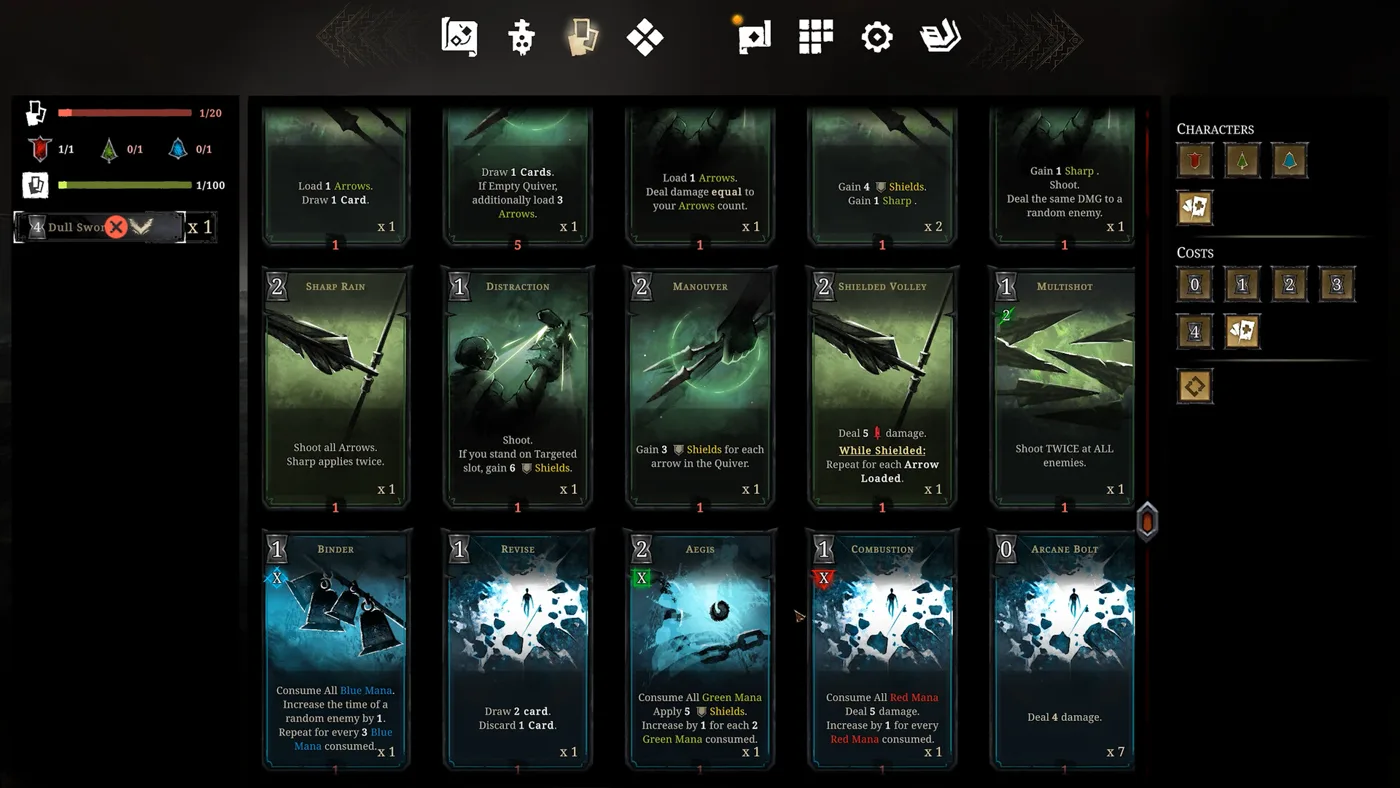
- Every card has a "time cost" that influences enemy actions.
- Redrawing your hand also costs time, impacting strategic flow.
Unraveling the Unique Combat of Shards of Order on Steam
Shards of Order, released on Steam on July 28, 2026, presents a grim, dark fantasy RPG experience that challenges the conventions of card-based combat. Developed by Fardust and published by Awaken Realms, this title quickly garnered "Very Positive" reviews, largely thanks to its innovative approach to core mechanics. Unlike many traditional deckbuilders, Shards of Order operates with no turns and no mana, forcing players to rethink their tactical approach entirely.
This distinctive design means that instead of waiting for your turn or managing a mana pool, you're constantly engaged in a dynamic battle against the clock. This guide will clarify how pacing and resources work in Shards of Order compared with conventional turn-based deckbuilders, highlighting the strategic depth this system introduces.
The Core Loop: Time is Everything
In Shards of Order, the concept of "time" replaces both traditional turns and mana as the central resource. Every enemy on the battlefield has a visible countdown above their head, indicating precisely when they will perform their next action. This countdown is dynamic, constantly ticking down.
The critical twist is that every card you play from your hand has a "time cost." When you use a card, its time cost is deducted from a global timer, which in turn accelerates the countdowns of all active enemies. This means that every action you take, no matter how small, pushes your adversaries closer to executing their moves. This constant pressure transforms combat into a thrilling dance of risk and reward, where managing the flow of time becomes paramount. As one player noted, "the most interesting mechanic that this game has going on is that [...] everything has a cost of increments of time.”
Playing Cards and Managing the Clock
Each card in your hand features a specific time cost. Playing a card not only triggers its effect but also advances the battle clock. For instance, a basic attack might cost one time, while a powerful defensive shield could cost two. The immediate consequence is that you can't simply spam your most potent cards; doing so will quickly allow enemies to unleash devastating attacks.
The "redraw" mechanic is another crucial element tied to the time system. By default, redrawing your hand costs four time. However, playing cards strategically can reduce this cost. The time cost of a redraw is decreased by the time cost of each card you play, resetting to four after every redraw. This mechanic encourages thoughtful card play, as you can manipulate the redraw cost to gain an advantage, potentially allowing for more actions before enemies strike. Mastering this ebb and flow of time is key to surviving the game's challenging encounters.
Strategic Redraws are Crucial.
Paying attention to how card plays reduce your redraw cost can save valuable time and allow for more flexible responses to enemy actions.
Shared Deck, Shared Fate: Resource Management
Further complicating (and enriching) the strategic landscape is the shared deckbuilding system. You command a party of three heroes, but all draw from a single, unified deck. This means that every card you add to your deck impacts the drawing odds for the entire party.
This shared resource management system interacts directly with the "no turns, no mana" philosophy. You must decide whether to specialize your deck around one hero, stacking cards heavily in their favor, or to diversify, ensuring all party members have viable options. Furthermore, equipment isn't just about stats; weapons and armor can inject unique cards directly into your shared deck, making every gear decision a critical deckbuilding choice. Layering the right gear across your three heroes can make them operate like a single, cohesive unit, capable of responding to the relentless pressure of the time-based combat.
Consequences and Strategic Depth
The unique time-based combat system in Shards of Order fosters a high degree of strategic depth. Misjudging the enemy's countdowns or overspending time on less impactful cards can quickly lead to your team's demise. Enemies clearly display their intentions, allowing you to plan, but the accelerating clock demands constant adaptation.
Beyond combat, the game weaves its narrative into its mechanics. As you restore the "Laws" that govern the shattered world, you draw the attention of an all-seeing God. This entity offers aid in your darkest moments but is known for its mischief, introducing further layers of consequence to your journey. This dynamic world, combined with the innovative combat, ensures that every decision leaves a scar and shapes your story.
Shards of Order on Steam truly throws out the rulebook, offering a fresh take on the deckbuilding RPG genre. Its "no turns, no mana" system is a testament to its originality, demanding a new kind of strategic thinking from players.
FAQ
What does "no turns, no mana" mean in Shards of Order Steam?
In Shards of Order, "no turns, no mana" means that combat doesn't follow traditional turn-based sequences or mana resource management. Instead, every action you take by playing a card advances a global "time" counter, which in turn accelerates enemy actions.
How do I manage resources without mana in Shards of Order?
Your primary resource in Shards of Order is "time." Every card has a time cost, and playing cards reduces the global time, bringing enemy actions closer. You must balance card plays with enemy countdowns to survive.
How does the redraw mechanic work with no turns, no mana?
Redrawing your hand has a base time cost (e.g., four time). However, playing cards reduces this redraw cost. This allows for strategic management, where you can play cheaper cards to reduce the redraw cost, enabling more flexible hand management before enemies attack.
Is Shards of Order a traditional turn-based game despite having no turns?
No, Shards of Order is not a traditional turn-based game. While it features card-based combat, the real-time element of enemy countdowns and the global "time" resource differentiates it significantly from standard turn-based systems, requiring more dynamic and reactive decision-making.